Dental Implants
Implant Bridges in Clark, NJ
Implant bridges in Clark replace several missing teeth in a row using a small number of implant posts as anchors, restoring your bite without resting on remaining natural teeth. Dr. Gary I. Borker, DMD, designs each bridge for comfort, strength, and a natural look.
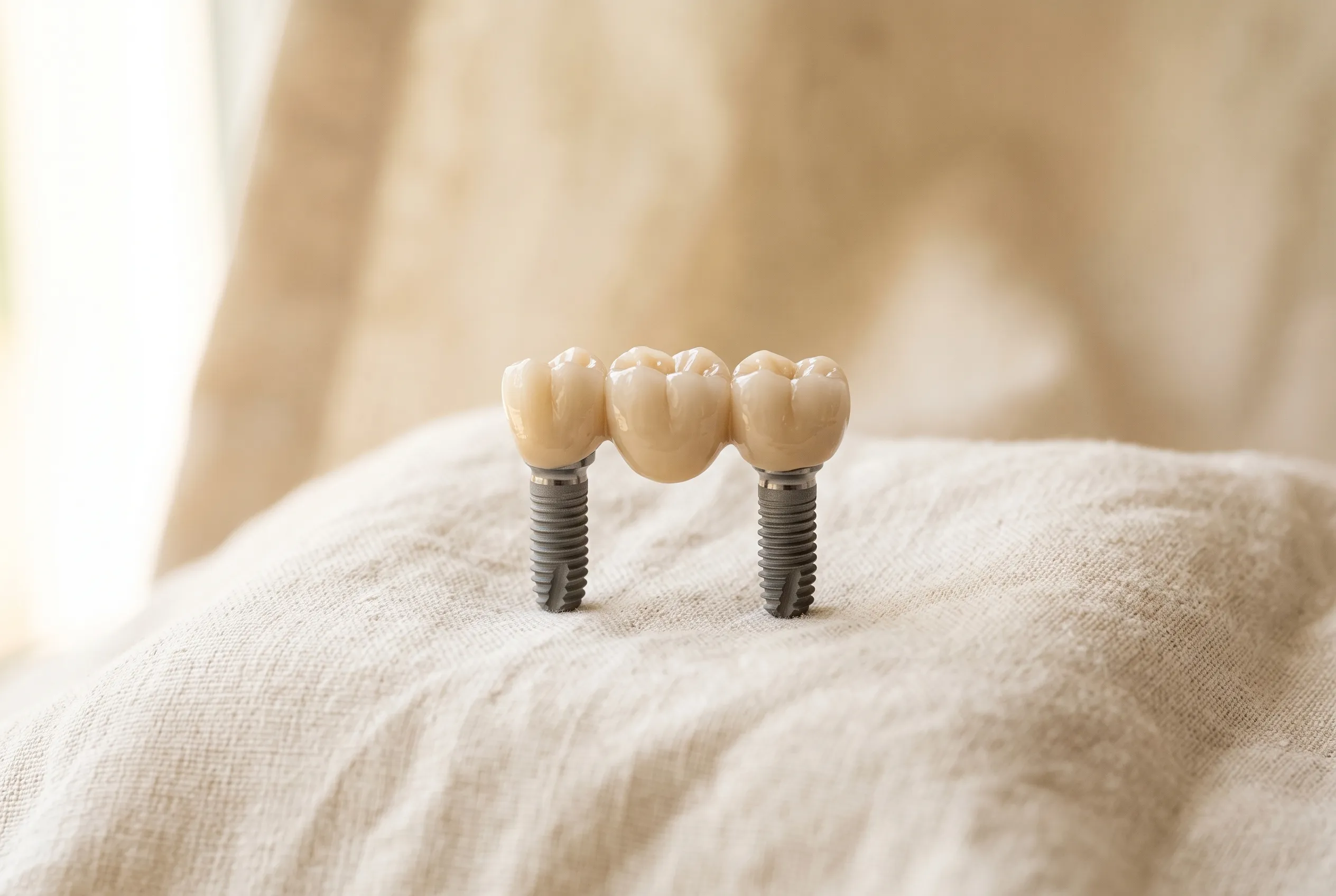
How an Implant Bridge Works
An implant bridge is designed to replace several missing teeth that sit next to one another. Rather than placing a separate implant for every gap, the bridge uses two or more strategically positioned titanium posts as anchors, with the replacement teeth spanning the space between them. This makes it an efficient and cost-conscious solution when you are missing three, four, or more teeth in a row. Once the posts have integrated with the bone, the bridge is secured firmly on top, giving you a row of teeth that feels solid and dependable.
The strength of this design comes from how the chewing forces are shared. Because the bridge is supported by posts rooted in the jaw rather than by your remaining natural teeth, those neighboring teeth are spared the strain of carrying a traditional bridge. Dr. Borker carefully maps out where each post should go so the load is balanced and the finished result looks even and natural. To appreciate how the anchoring posts are placed and how they bond with bone, our broader guide to dental implants explains the foundation that makes implant bridges possible.
Implant Bridge or Traditional Bridge
A traditional bridge has helped people for generations, and it remains a good choice in many situations. It works by placing crowns on the healthy teeth that border a gap and suspending replacement teeth between them. The trade-off is that those border teeth must be reshaped to hold the crowns, and they carry the chewing load for the whole span. Over many years, that added stress can affect their longevity, and because the bridge sits above the gum, the bone beneath the missing teeth continues to shrink.
An implant bridge takes a different path. By rooting the support in the jawbone, it leaves your natural teeth untouched and helps preserve the bone in the area, since the posts keep stimulating it much as natural roots would. It tends to feel more like your own teeth when you bite and chew. The right choice depends on how many teeth are missing, the health of the surrounding teeth, and the condition of your bone. If a conventional approach turns out to suit you better, Dr. Borker also offers traditional dental bridges, and he will walk you through the comparison honestly so the decision feels clear.
Restoring Smiles for Clark and Union County
Replacing a run of missing teeth is about far more than appearance, though a confident smile certainly matters. It is about being able to chew comfortably, speak clearly, and feel at ease in everyday moments. Patients throughout Clark and across Union County come to Dr. Borker because he treats these restorations with the care of someone who will see them again, not as a one-time transaction. He takes the time to understand how you eat, talk, and live so the finished bridge fits naturally into your routine.
Having this work done right here in Clark keeps the process grounded and convenient. An implant bridge involves planning, placement, and a final fitting, and being able to handle each stage close to home removes a great deal of stress from the experience. There is no long drive to an unfamiliar specialist and no starting over with a team that does not know you, which makes the whole journey feel calmer from beginning to end. Our team knows the local families we serve, and that familiarity means you are cared for by people who remember your history and your preferences. For many Union County neighbors, that lasting relationship is exactly what turns a complex treatment into a reassuring one, and it is a big part of why they recommend Dr. Borker to the people they care about.
Frequently asked questions
- How many implants does an implant bridge need?
- Most implant bridges are anchored by two or more posts, depending on how many teeth are missing and where the gap is located. Dr. Borker determines the exact number during planning so the bridge is well supported and the chewing forces are balanced.
- Can an implant bridge replace teeth at the back of my mouth?
- Yes. Implant bridges work well for gaps toward the back, where chewing forces are strongest and a stable, well-anchored solution matters most. Dr. Borker will confirm that the bone in the area can support the posts during your evaluation.
- How do I care for an implant bridge?
- You care for it much like natural teeth, with daily brushing and cleaning around the bridge, plus regular checkups. Dr. Borker and the team will show you simple techniques to keep the area clean and your bridge in good shape for the long term.
Welcome to the practice
Give your smile the best in dental care
From the moment you walk through our door, you are greeted with a smile and a warm hello. Call today or request an appointment online, and discover dental care made easy.